

Overgrown trees in Dickson, TN, can turn your roof into a real headache as branches scrape shingles badly. And fallen leaves clog gutters faster, and accumulated water overflows. The tree’s constant shade keeps your roof damp all the time and causes moss and algae growth. You will face costly repairs and an overall decrease of property value.
This article explores these problems and what you can do to prevent them.
How Overgrown Trees Damage Roofs
Overgrown trees damage roofs by scraping shingles with their heavy branches constantly. You’ll see cracks and holes that let water inside your home. Falling limbs can also puncture through roofing materials during storms. Let’s explore them in detail:
Branches Scraping and Damaging Shingles
Wind pushes low-hanging branches back and forth across your roof. This repeated contact acts like sandpaper and damages the protective granules, the weatherproofing layer.
How to Remove Tree Branches from Roofs?
To safely remove tree branches from your roofs, you can take the following actions:
- Assess safety risks first
- Avoid walking on roof
- Call an arborist near you for safety
- Trim back overhanging limbs
- Schedule regular pruning
- Check after every storm
Falling Limbs and Storm Debris Impact
Florida averages around 54” of rainfall annually with frequent share of hurricanes. It causes overgrown branches to snap and fall quite easily. Dead wood breaks during thunderstorms and ice events, too. The damage often goes beyond minimal impact and leads to expensive repair.
Leaf Piles Creating Moisture and Rot
All that rainwater combines with fallen leaves on your roof. The wet leaves create a soggy mat in valleys, and moisture gets trapped underneath. They never fully dry out. And fungal growth starts spreading between and under your shingles. Wood rot develops in the roof deck below. So, what starts as a leaf pile becomes structural decay.
How to Remove Moisture From the Roof?
Moisture problems need to be addressed with these actions:
- Trim back overhanging branches
- Clear all debris regularly
- Improve sunlight and airflow
- Clean gutters every season
- Inspect roof valleys often
Shade from Tree Canopies Causes Moss and Algae
Overgrown tree canopies block sunlight from reaching your roof. Their thick crowns also keep shingles damp all day long.
Moss grows in thick patches in these cool and shaded conditions on roofs. Also, the moss roots gradually lift up your shingles and cause water to seep underneath. It’s the kind of damage that creates leaks you won’t see until later.
How Can I Stop Moss from Growing on My Roof?
Prevention works better than removal when it comes to moss. Take these steps to stop growth before it starts:
- Prune trees for sunlight
- Install copper roof strips
- Remove existing moss safely
- Schedule annual tree trimming
- Keep roof debris-free
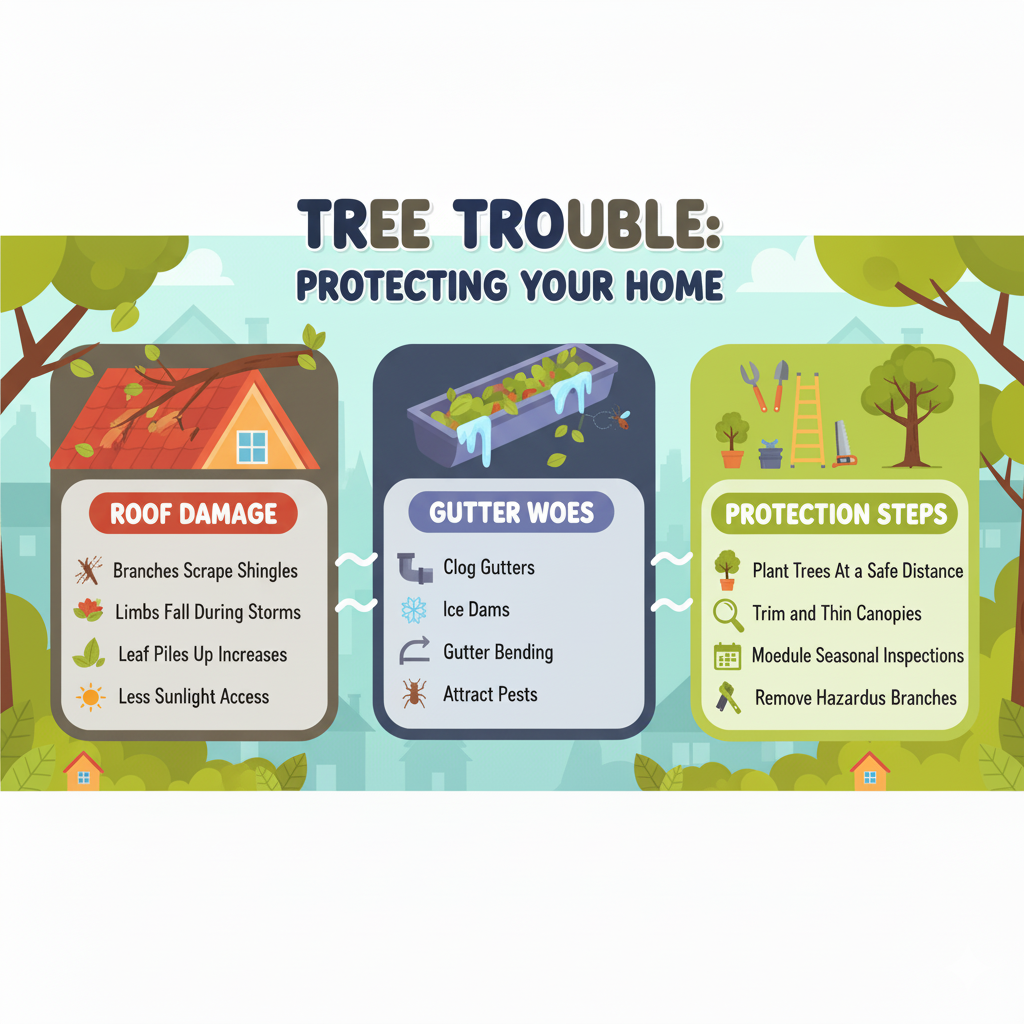
How Overgrown Trees Affect Gutters
Overgrown trees affect gutters by dropping leaves and debris constantly. You’ll see blockages that cause water to overflow and damage foundations. The extra weight can also bend or pull gutters loose.
Leaf and Twig Clogs from Overhanging Branches
Red maple and black walnut trees drop leaves by the thousands. Tulip poplars add their own share of debris each fall. The leaves and seeds wash into your gutters, settle in downspouts and create complete blockages there. Water has nowhere to go except over the sides and damage your foundations.
How to Stop Leaves from Blocking Gutters?
Preventing leaf buildup requires consistent action throughout the year. Here’s your game plan:
- Trim back overhanging branches
- Install quality gutter guards
- Clean gutters twice yearly
- Cut back nearby trees
- Check downspouts for blockages
- Schedule professional tree trimming
Ice Dams Caused by Tree Debris in Winter
The trapped water freezes solid and expands inside your gutter system. Ice pushes against seams and cracks the metal joints. This weight pulls gutters away from your fascia boards. Melting ice backs up under your roof shingles, too.
How to Prevent Ice Dams in Winter?
Stopping ice dams means addressing the problem before winter arrives. Take these preventive steps:
- Clear gutters before cold weather
- Trim branches away from roofline
- Remove all leaf debris
- Improve attic insulation properly
- Add heat cables if needed
- Schedule fall tree maintenance
Heavy Branches Bending or Breaking Gutters
The constant weight of large limbs on the aluminum gutters bends them out of their shape. Sagging sections no longer slope toward the downspouts correctly. It causes water to pool in these low spots instead of draining away. A falling heavy limb can easily tear gutters off the house.
Decaying Leaf Matter Attracting Pests
Wet leaves in gutters draw mosquitoes, ants, and termites quickly. These pests eat through the wood fascia holding your gutters up. Rodents build nests in the debris and chew through metal seams. The clogged gutters become highways straight to your attic and siding.
How to Protect Your Roof and Gutters from Overgrown Tree Damage
To protect your roof and gutters from overgrown tree damage, it’s important to take the following actions:
Plant Trees At a Safe Distance
Young saplings look small but grow into massive shade trees. Their branches spread wider than you expect over the years. Roots expand underground and can reach your foundation surprisingly fast. Planning the right distance now prevents headaches down the road.
How Far Should a Tree Be Planted from a House?
Distance depends on how tall the tree will grow at maturity. Follow these spacing guidelines:
- Small trees: 10 feet minimum
- Medium trees: 15-20 feet away
- Large trees: 20-50 feet clearance
Trim and Thin Canopies
Tree trimming stops branches from touching your roof, while thinning out dense canopies lets air flow through more easily. It keeps your trees healthier, and your home stays safer.
How Often Should I Trim Trees?
You should trim trees once or twice per year depending on growth rate. Fast-growing trees need more frequent trimming than slow-growing species. Schedule trimming in late winter or early spring for best results.
Monitor Tree Health
Regular health checks catch problems before branches fall on your roof. Diseases like oak wilt and anthracnose weaken limbs from the inside. But a preventive approach protects both your roof and gutters from falling limbs and debris.
What Warning Signs Do You Need to Look For?
Watch for these common problems that signal trouble ahead:
| Warning Sign | What It Means |
| Dead or bare branches | Disease or pest damage present |
| Cracks in trunk or limbs | Structural failure risk is high |
| Leaning tree posture | Root problems or wind damage |
| Fungus growing on bark | Internal decay spreading inside tree |
| Brittle or peeling bark | Tree is dying or already dead |
| Unusual leaf discoloration | Disease or nutrient deficiency issue |
Schedule Seasonal Inspections
Seasonal tree maintenance happens after spring storms roll through. Fall checkups prepare your trees for winter ice and wind. Trained arborists look at branch structure and overall tree health. They identify weak limbs before they fall on your gutters.
When Should I Get My Trees Inspected?
Inspection frequency depends on your trees’ age and health condition. Use this timeline:
- Every 3-5 years normally
- Annually for older trees
- After every major storm
- When you see damage signs
- Before starting construction projects
Remove Hazardous Overhanging Branches
Branches hanging directly over your roof pose the biggest threat. Wind pushes them back and forth across your shingles constantly. Heavy limbs rest on gutter edges and bend them slowly. Removing these hazards prevents costly roof and gutter damage.
Protect Your Roof and Gutters with Gomez Tree Service
Gomez Tree Service keeps overgrown trees away from your roofline and gutters. Our tree service in Dickson, TN, trims back dangerous branches before they cause damage. Our arborists clean up debris that clogs your gutters and creates moisture problems. When storms knock limbs down, our emergency response protects your home fast. Call (931) 716-2440 or request a free estimate today.